We’ve confused portraiture with performance. Somewhere along the way, the goal of being photographed became “look good,” as if the entire point of a portrait is to survive scrutiny. But that’s never been what makes a photograph worth keeping.
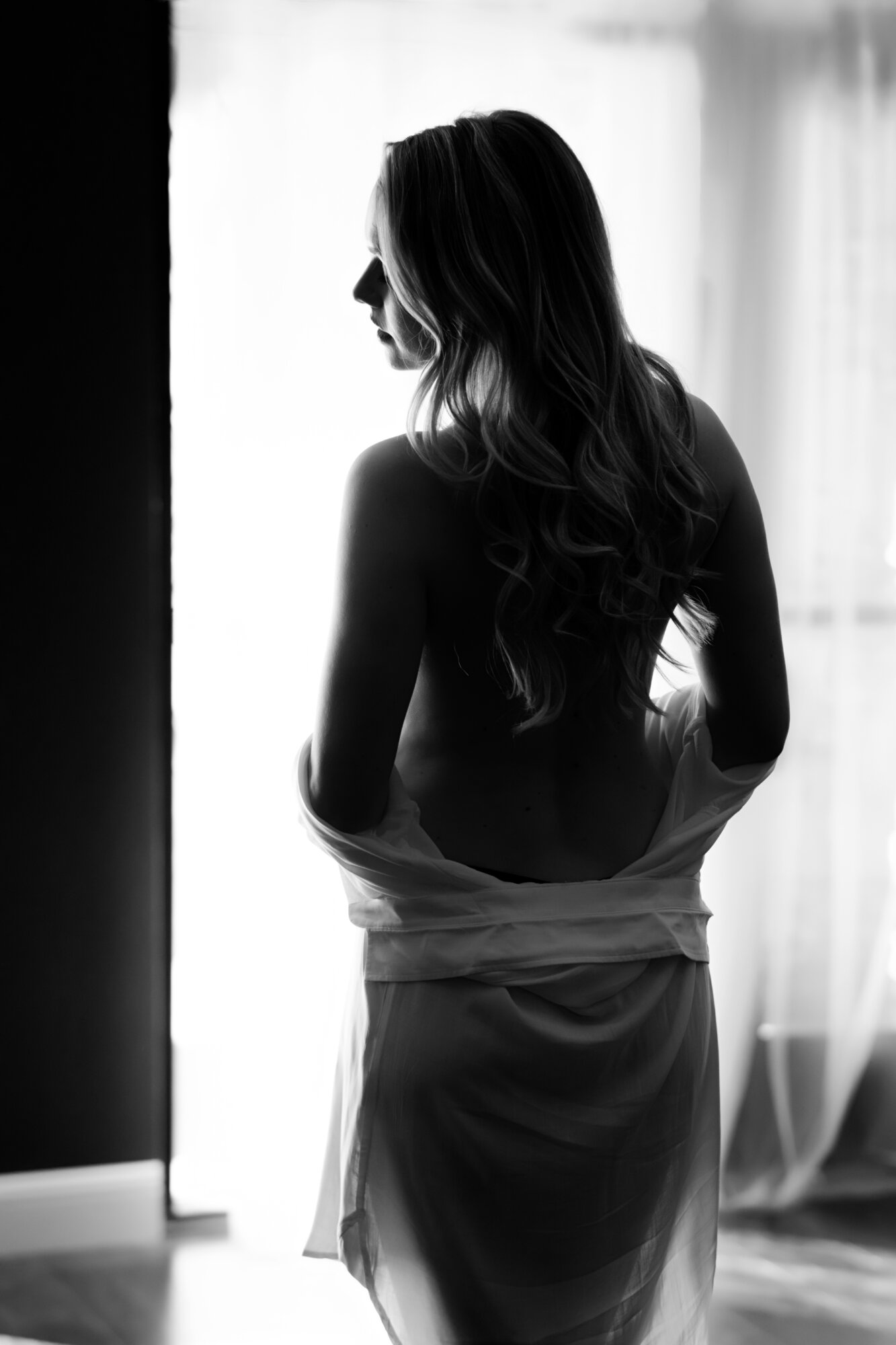
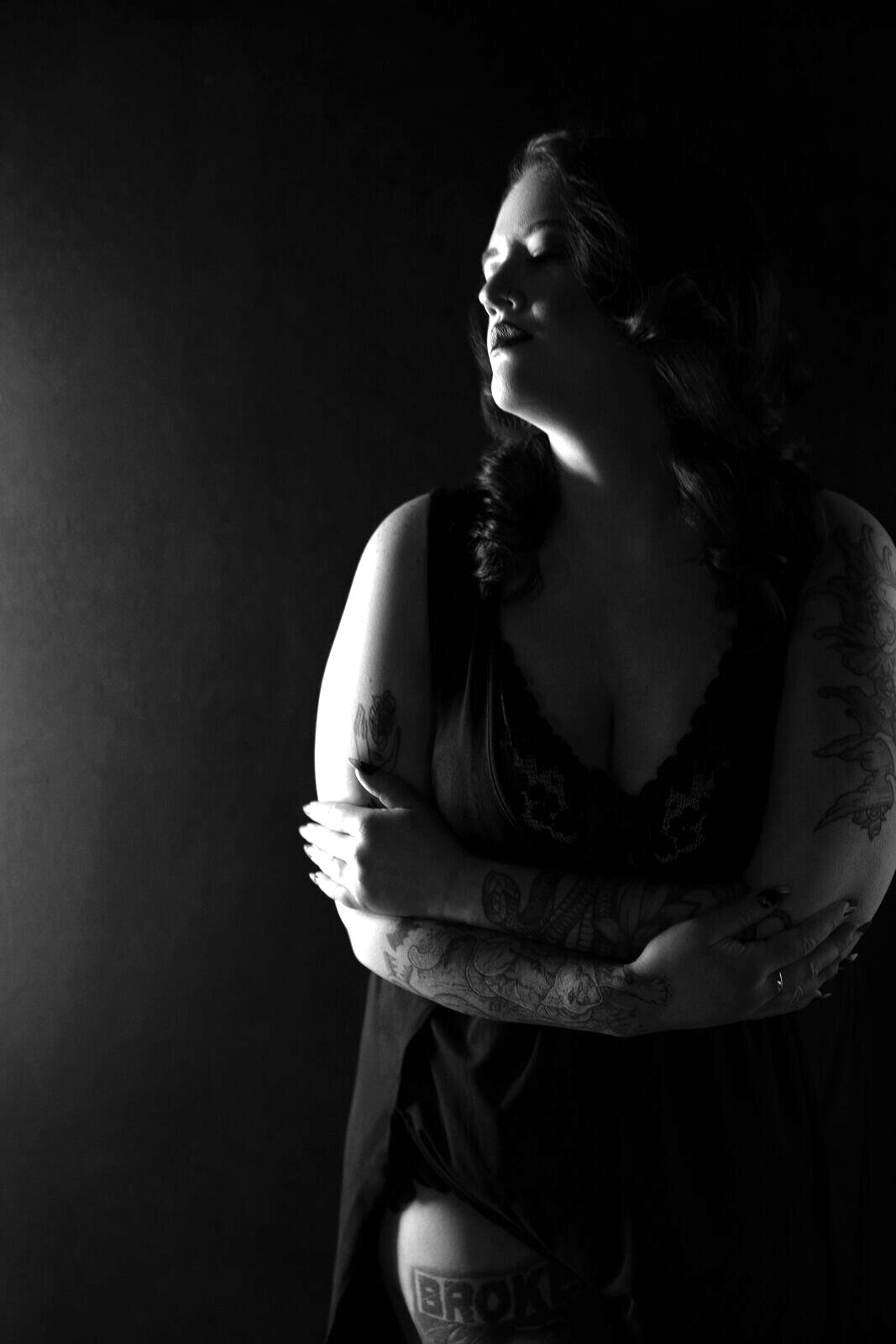
The images women return to, year after year, the ones they pull up on a hard drive when they’re missing an old version of themselves, or grieving someone, or trying to remember who they were at twenty-nine, are rarely the technically perfect ones. They’re the ones that feel like something. A soft exhale caught mid-breath. A hand resting on a collarbone. The particular way light fell across a shoulder on an ordinary Tuesday that turned out not to be ordinary at all.
What we actually mean by "preserving a chapter"
Every session I direct is built around one question: what does this specific season of your life actually feel like? Not what do you want to look like, what does it feel like to be exactly who you are right now, at this age, in this body, at this point in your story. Maybe it’s the quiet after a divorce, when you’re rebuilding a relationship with yourself from scratch. Maybe it’s the exhale after finally hitting a milestone birthday you spent years dreading. Maybe it’s simply the ordinary, unremarkable Tuesday of a life you happen to love.
None of those are things a camera can capture by accident. They have to be built, through the music playing in the room, the pace of the direction, the space held for you to actually settle into your body instead of performing for it.
Beauty changes. Story endures.
This is the sentence that anchors everything I do. Your face at forty will not look like your face at twenty-five. Your body will keep changing, quietly and constantly, for the rest of your life. If a portrait’s only job is to document how you looked, it has an expiration date built into it, the moment your appearance shifts, the photograph starts to feel dated, even embarrassing.
But if a portrait’s job is to preserve how a chapter felt, it never expires. You don’t look back at it and think, “I don’t look like that anymore.” You look back at it and remember exactly what that season of your life was made of.
What this looks like in practice, not just in theory
Picture two images of the same woman, taken a year apart. In the first, she’s holding a pose someone told her to hold, thinking about her stomach, her arms, whether her smile looks natural. In the second, she’s mid-laugh at something I said off camera, one hand still resting against her collarbone from a moment earlier, completely unaware of how she looks because she’s too busy actually feeling something. The second photograph will mean more to her in twenty years, regardless of which one is more technically flattering. That’s not a coincidence. That’s the entire difference between documenting and preserving.
This is why I spend so much time on the parts of a session that have nothing to do with a camera, the conversation before we start, the music chosen specifically for the mood we’re building, the pacing that never rushes a woman past the moment she’s actually in. Those elements aren’t extras. They’re the mechanism by which a photograph stops being a picture of a body and becomes a record of a feeling.
Why the experience matters more than the image
This is also why I never treat a session as fifteen minutes of shutter clicks. The breathwork before the camera comes out. The way I read your body and adjust before you ever have to ask. The music, the pacing, the permission to stop bracing. All of that is the actual work. The photograph is simply the evidence that it happened.
A portrait shouldn’t just document what someone looked like. It should preserve who they were.
The goal was never to become fearless
I want to be honest about something most photographers won’t say out loud: the goal of a boudoir session is not to walk in fearless. Almost no one does, and pretending otherwise sets women up to feel like they failed some test before they’ve even started. The actual goal is smaller and far more achievable, to choose an experience that helps your body stop bracing long enough to soften. That’s it. That’s the whole thing.
Everything else, the images, the album, the way you feel scrolling through your gallery months later, comes from that single shift.
I say this because so many women delay booking while they wait to feel a version of ready that simply isn’t required. If you’re waiting to feel fearless, you may be waiting indefinitely. What you actually need is much smaller and far more attainable: a willingness to show up, breathe, and let someone else hold the direction for a few hours while you simply exist inside your own body.
What this means for you
If you’ve been circling the idea of a session, wondering whether you’re the “type” of woman who does this, I’d offer a different frame entirely. This was never about becoming a different kind of woman. It’s about preserving the one you already are, in the exact chapter you’re currently living.
There’s a phrase I come back to often: beautiful experiences shouldn’t be postponed. Not because life is short in some morbid, urgent sense, but because life is simply lived in chapters, and each one closes whether or not you documented it. The chapter you’re in right now, however ordinary or extraordinary it feels from the inside, will look entirely different a decade from now, remembered instead of witnessed. A portrait taken today is one of the only ways to actually hold onto how it felt to be exactly who you are, right now, before the next chapter quietly begins.
If this philosophy resonates, let’s start with a conversation. Book your consultation and let’s talk about the chapter you’re in right now.
+ view the comments